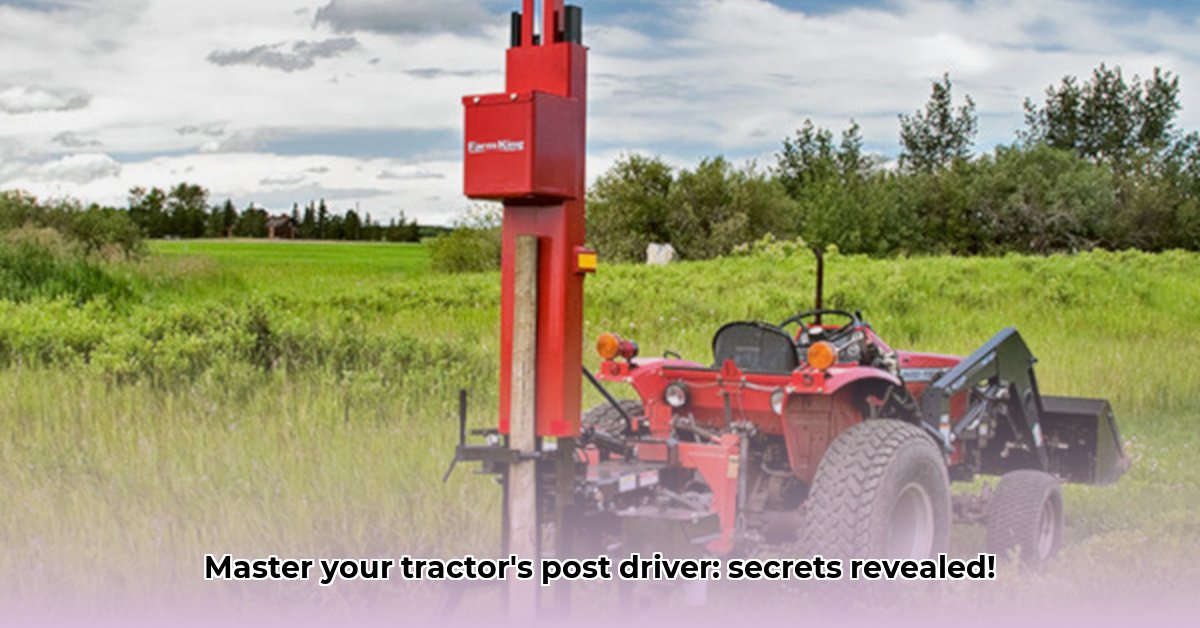
Farm King Post Driver Models: A Detailed Comparison
Choosing the right post driver significantly impacts farm efficiency. Farm King offers two models: a 3-point hitch model and a trailer-mounted model. This guide compares both, providing step-by-step instructions and maintenance tips. Efficient post driving is crucial for timely fence construction, a critical aspect of sustainable agricultural practices. How can you optimize your fencing process? For more post driver information, see this helpful resource.
3-Point Hitch Model
This model directly attaches to your tractor's 3-point hitch, offering superior maneuverability in tighter spaces. It's ideal for smaller farms or quick fence repairs. Precise specifications are unavailable at this time; however, a primary benefit lies in its efficient integration with an existing tractor setup. This implies lower initial costs compared to an independent system. However, this also means it requires a tractor with a functioning PTO (Power Take-Off). Does your tractor's PTO sufficiently handle the task?
Trailer-Mounted Model
This model sits on a trailer, offering an independent power source, typically a PTO or an independent engine. Therefore, it is less dependent on the tractor and more suitable for extensive fencing projects on larger farms or uneven terrain. This model’s flexibility comes at the cost of increased initial investment and storage requirements. Also, the lack of available specifications currently prevents a thorough comparison of power output and impact force. What are the specific power specifications for optimal post-driving performance?
Comparing Farm King Post Driver Models
The following table summarizes the key differences between the two models. Note that some specifications are unavailable and require further investigation.
| Feature | 3-Point Hitch Model | Trailer-Mounted Model |
|---|---|---|
| Power Source | Tractor PTO | PTO or Independent Engine |
| Maneuverability | High | Lower |
| Farm Size | Smaller to Medium | Medium to Large |
| Initial Cost | Lower | Higher |
| Maintenance | Lower (integrated) | Higher (separate engine) |
| Best Uses | Quick repairs, smaller fences | Large-scale fencing projects |
Step-by-Step Instructions: Operating Your Farm King Post Driver
Safety is paramount. Always consult your owner's manual before operating any equipment.
For both models:
- Safety First: Clear the area of obstacles and ensure no one is nearby.
- Proper Connection: Securely attach the post driver to your tractor or trailer hitch.
- Post Alignment: Carefully position the post within the driver's guides.
- Driver Activation: Engage the driving mechanism according to the manufacturer's instructions. Monitor for any irregularities.
- Post Depth: Drive the post to the required depth.
- Disengagement: Safely disengage the driver and the power source.
Maintenance and Troubleshooting
Regular maintenance maximizes performance and lifespan.
- Fluid Levels: Check and maintain the correct fluid levels regularly.
- Component Inspection: Inspect all moving parts for wear and tear.
- Lubrication: Lubricate moving parts as specified in the manual.
- Part Replacement: Replace worn or damaged parts promptly.
- Cleaning: Keep the unit clean and free of debris.
Common issues include hydraulic leaks (check seals), jammed mechanisms (clear obstructions), and engine problems (refer to engine manual).
Sustainability Considerations
Mechanized post driving significantly boosts farm efficiency, contributing to sustainable practices by reducing labor and improving land management. However, comprehensive lifecycle environmental data (material sourcing, energy consumption, disposal) is currently lacking for both Farm King models which prevents a complete sustainability assessment. Will future research reveal the long-term environmental impact of these post drivers?
Conclusion
The best Farm King post driver depends on your farm's size, fencing needs, and budget. Carefully weigh the pros and cons of each model before purchasing, considering both immediate and long-term costs and sustainability implications. Increased transparency from manufacturers on detailed specifications and lifecycle environmental impacts would significantly aid in making well-informed decisions.